
Radiant floor heating can provide comfortable, even heat, but performance depends on a well-planned floor assembly. Inconsistent tubing spacing, poor tubing retention, inadequate insulation, and incorrect system design can all affect the finished system.
Addressing these details before concrete placement can help prevent uneven heating, installation delays and avoidable adjustments later in the project.
Inconsistent Tubing Spacing
PEX tubing must follow the spacing established in the system design. Runs placed too close together can concentrate heat in one area, while wider or irregular gaps may leave other parts of the floor cooler.
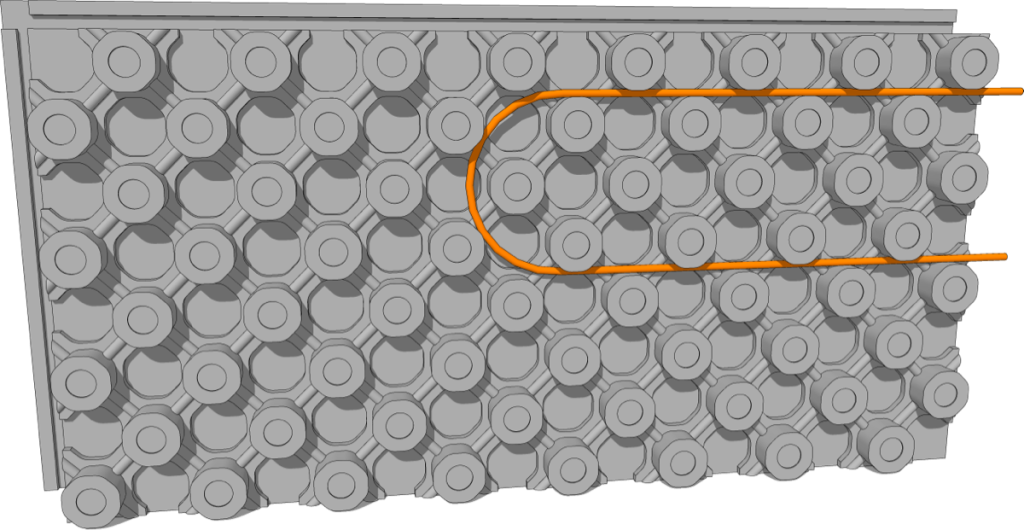
Mark the layout before installation and check the spacing as each loop is placed. AmPex panels include a 3-inch grid and molded nubs that give installers clear reference points for maintaining the planned pattern across the floor.
Tubing That Does Not Stay in Place
Unsecured tubing can move as installers walk across the floor or as concrete is placed. A shifted loop may no longer match the intended layout, and raised sections can interfere with proper placement within the slab.
The mushroom-shaped nubs on AmPex panels grip the PEX directly. This keeps the tubing in position without relying on staples, clips or ties throughout the installation.
Poor Contact Between the Tubing and Concrete
Radiant heating works by transferring heat from the PEX tubing into the surrounding concrete. Tubing that lifts or moves out of position may produce less consistent heat transfer across the slab.
Check the tubing before the pour and secure any areas that have moved. The locking pattern on AmPex panels holds the PEX at a consistent position so the layout remains stable during concrete placement.
Incorrect Tube Size or Loop Layout
Tube size, spacing and loop length should be selected according to the heating load and floor plan. Using the same configuration throughout every room can lead to poor performance because perimeter areas, open spaces and rooms with different heat-loss conditions may have different requirements.
The system should be planned by a qualified professional before installation begins. AmPex is available in configurations for different PEX tubing sizes and insulation requirements, allowing the specified design to be carried through the floor assembly.
PEX Damage During Installation
PEX tubing remains exposed until the concrete is poured. Foot traffic, dropped tools and work performed by other trades can damage the tubing or pull it away from the planned route.
Keep unnecessary traffic off the installed system and inspect the tubing before concrete placement. AmPex provides a firm walking surface while its molded nubs limit tubing movement across the floor.
The system should also be pressure-tested according to the tubing manufacturer’s requirements before the slab is poured. This allows damaged tubing or loose connections to be identified while they are still accessible.
Insufficient Under-Slab Insulation
A heated slab should direct as much heat as practical toward the floor surface and occupied space. Without adequate insulation below the slab, a greater amount of heat can travel into the ground rather than the building.
Insulation requirements should be confirmed for the climate, building design and applicable code. AmPex panels place EPS insulation directly beneath the PEX tubing and are available in R-Values from R10 to R16.
Overlooking the Vapor Barrier
Ground moisture can move through an under-slab assembly when no suitable vapor-control layer is present. Installing insulation and a separate membrane as unrelated steps can also create more seams, material handling and opportunities for damage.
AmPex features a High Impact Polystyrene (HIPS) film, eliminating the need for a dedicated polyethylene vapor barrier (unless specifically required by local building code). Panel joints and penetrations still need to be treated according to the project specifications to maintain continuity across the assembly.
Failing to Inspect the System Before the Pour
Once the concrete is placed, correcting a tubing problem becomes much more difficult. A final inspection should confirm that the loops follow the design, the PEX remains securely held, connections are complete and the system has passed the required pressure test.
Any issue found at this stage should be corrected before concrete work begins. Taking time for this inspection can prevent larger problems after the floor is finished. AmPex keeps PEX tubing neat and organized allowing for easy access and inspection of the system prior to concrete work.
Plan the Floor Assembly Before Installation
Many radiant floor heating problems begin with decisions made before the tubing reaches the jobsite. The heating design, insulation level, tubing configuration and concrete installation should be coordinated as one floor assembly.
AmPex brings rigid EPS insulation, vapor control, layout guidance and PEX retention together in a single panel. Its molded nubs hold the tubing without staples or zip ties while helping installers follow the specified layout across the slab.
Find an Alleguard distributor for AmPex product availability and project information.